The Death of Cash is Taking Longer Than Expected and Here’s Why
“Cash remains the most popular means of payment in the economy, and we are committed to ensuring cash remains readily available and convenient.” (Rashad Cassim, Deputy Governor, South African Reserve Bank)
For years, the story seemed straightforward: smartphones, banking apps, contactless cards and instant payments would steadily push cash towards the exit. South Africa has embraced those technologies, and digital payments are increasingly normal, and yet cash has proved harder to dislodge than many predictions suggested.
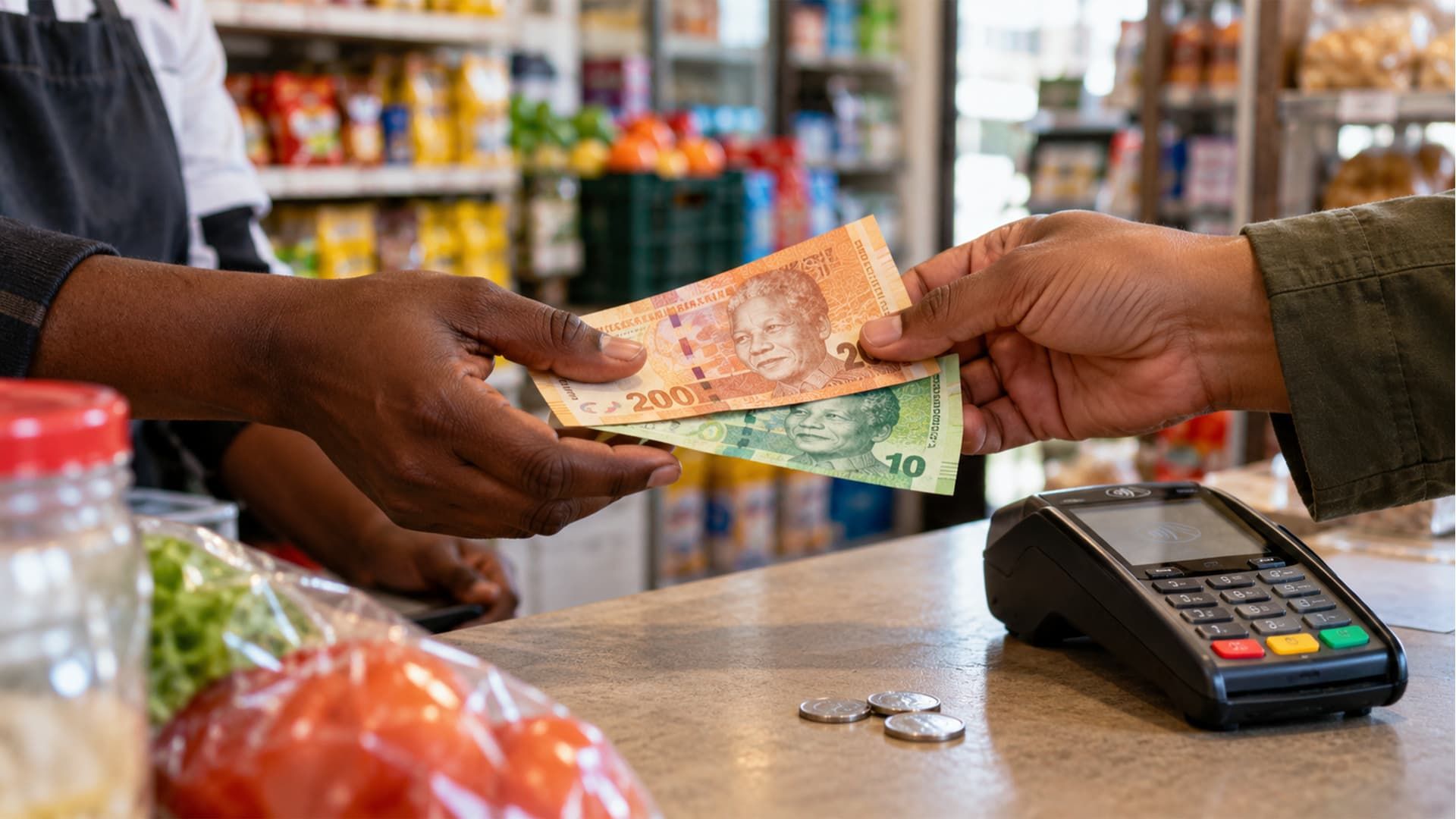
Using 2024 as its base year, the South African Reserve Bank’s 2026 Cost of Cash study found that cash still accounted for about 56% of consumer transactions by volume. That doesn’t mean digital payments have stalled. It means South Africa is developing a payment system in which digital and cash transactions coexist, serving needs and circumstances for millions of people. The death of cash is taking much longer than initially expected.
Digital payments are growing rapidly
There is little doubt that South Africa is becoming increasingly digital when it comes to payments. Contactless cards, banking apps, instant payments, digital wallets and online shopping have changed how many consumers pay.
Businesses have plenty of reasons to make the switch. Digital payments can reduce cash handling, simplify reconciliation and allow businesses to accept payments without being physically present. Mastercard’s 2025 SME Confidence Index found that 90% of South African SMEs surveyed had adopted digital payments.
Online shopping provides another indication of the shift. Research from World Wide Worx, Mastercard, Peach Payments and Ask Afrika estimated that online retail would reach R159 billion in 2026, representing 10% of South African retail turnover. The digital economy is booming, but it’s doing so alongside cash.
Cash remains an everyday payment method
While cards and digital payment methods tend to account for a larger proportion of higher-value transactions, the SARB found that cash is much more important for transactions involving lower amounts. According to the study, the average cash payment was R208.44, compared with an average of R529.21 across all payment methods. For many businesses and customers, the simplicity of cash still has value.
One size doesn’t fit all
Another reason cash has proved difficult to eliminate is that South Africa’s economy is not uniform. A consumer living in an affluent urban area with reliable connectivity and several digital payment options has a very different payment environment from somebody buying goods from an informal trader or living in an area where financial infrastructure is less accessible.
The SARB’s Cash Smart Strategy recognises this difference, identifying rural towns, townships and informal settlements as areas where cash remains particularly important.
Immune to technological failure
Even in areas where the technology is generally available, breakdowns occur. Power failures, network problems and technical outages can interrupt electronic transactions, while cash sails steadily on. In a country that’s experienced repeated infrastructure disruptions, that remains a practical consideration.
Feel the burn
Digital payments can make spending feel invisible: a tap of a card or phone is barely noticeable. Cash makes the transaction more tangible, and withdrawing a fixed amount can also provide a straightforward way of controlling spending.
This means there is also a behavioural reason for cash’s resilience. Simply making digital payments available to an area therefore does not guarantee that everyone will adopt them.
The informal economy matters
South Africa’s informal economy is another important part of the picture. Many informal businesses operate on a smaller scale and may have different banking relationships, infrastructure and administrative requirements from larger formal retailers. In this sector, cash remains a practical way of accepting payment from customers without investing in additional technology, or third-party systems, which may be costly or cut into margins which are already extremely tight.
What this means for small business owners
For the average South African small business owner, cash’s resilience points to a practical lesson: being able to accept both is probably a smart choice when plotting the way forward. We can help you work out just how relevant each payment option is to your business, but here are some general rules.
- Don’t turn away the cash customer. With cash still making up about 56% of consumer transactions by volume, a business that refuses cash risks losing a large share of everyday spending. That matters most for lower-value purchases. For businesses selling small-ticket items, cash customers are most likely the real core of the trade.
- Build in a backup. Power cuts, network failures and platform outages can stop card machines and payment apps at the worst moment. A business that can still take cash, and keeps enough change on hand, can keep trading while competitors send customers away.
- Offer a full range of options. With 90% of surveyed SMEs already using digital payments, being able to accept them is fast becoming the baseline. The advantage lies in combining that with cash, so that customers can pay however suits them.
- Manage the costs. There are numerous reasons why taking cash might be attractive, particularly for businesses that operate alongside the informal economy. The savings on bank fees may be attractive, but this should be carefully weighed against the risks of holding cash, so regular banking of takings and careful record-keeping are essential.
The businesses best placed to benefit are those that treat cash and digital payments as partners rather than competitors. And it doesn’t look like that will change soon.
Disclaimer: The information provided herein should not be used or relied on as professional advice. No liability can be accepted for any errors or omissions nor for any loss or damage arising from reliance upon any information herein. Always contact us for specific and detailed advice.
© AccountingDotNews

